Ledger® Live: Desktop® — Getting Started | official Ledger™
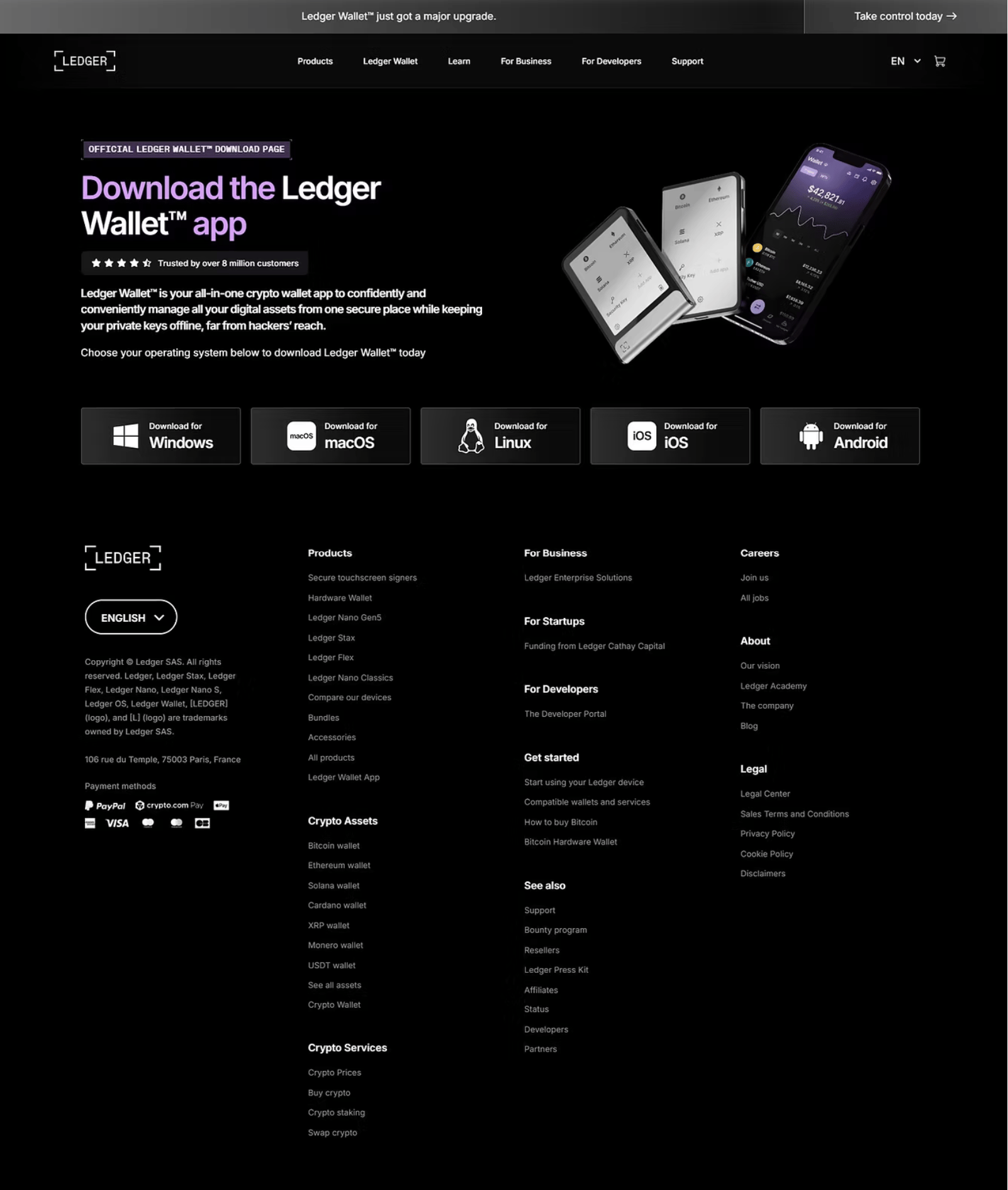
Get familiar with Ledger Live Desktop through helpful explanations of dashboard features, cryptocurrency balances, account activity, and transaction management.
Ledger Live Desktop: A Practical Guide to Computer-Based Crypto Management
Managing cryptocurrency from a computer can be convenient, especially when you want a larger view of your accounts and transaction history. Ledger Live Desktop is designed to support this process by providing a desktop interface for compatible Ledger hardware wallets. Learning how its different functions work can help users develop a more careful approach to digital asset management.
The Role of Ledger Live Desktop in Wallet Management
Ledger Live Desktop is companion software for supported Ledger hardware wallets. It provides tools for viewing supported cryptocurrency accounts, checking portfolio information, reviewing transactions, and accessing available account features.The hardware wallet and desktop application have separate responsibilities. The application provides the interface, while the physical device protects private keys and is used to approve supported transactions.Understanding this separation is useful because installing Ledger Live Desktop does not mean that your recovery phrase should be entered into the computer. Your recovery information must remain private and offline.
One important part of using Ledger Live Desktop is understanding that digital assets operate on different blockchain networks.A cryptocurrency may be available across multiple networks, and an address or transfer method suitable for one network may not be suitable for another. Before receiving or sending funds, confirm that the asset, network, and destination address are compatible.For example, selecting an asset by name alone is not enough to guarantee that a transfer will reach the intended account. Network compatibility matters just as much as the asset itself.Ledger Live Desktop may display supported network and account information, but users should still verify the details before initiating a transfer.
Users who manage several cryptocurrencies may find it helpful to keep their accounts organized. Ledger Live Desktop provides an interface for viewing supported accounts and their activity.You can use account information to understand where assets are held, review previous transactions, and monitor changes in displayed balances. Reviewing transaction history can also help identify unfamiliar activity that deserves further investigation.Remember that displayed portfolio values may change with market prices and available data. A balance shown in the application is an informational view, not a guarantee of future value.A simple account organization routine can make it easier to understand your holdings without making unnecessary changes.
Software authenticity is essential when using a hardware wallet. Fake applications and imitation websites may look convincing, but they can be designed to collect sensitive information or mislead users into approving harmful transactions.Download Ledger Live Desktop only after independently verifying Ledger’s official website. Check the address carefully rather than trusting a link sent through an unsolicited email, advertisement, social media message, or private chat.Be particularly cautious if a website asks you to type your recovery phrase into a computer. This is not a normal requirement for routine Ledger Live Desktop account management.If an application behaves unexpectedly or requests information that seems unnecessary, stop and verify the request through official support resources.
A hardware wallet provides an additional opportunity to inspect transaction details before authorization. When using Ledger Live Desktop to prepare a supported transaction, review the information displayed on the physical device.Pay attention to the recipient address, cryptocurrency, network, amount, and transaction fee. Compare these details with the information you intended to use.A computer screen alone should not be treated as the final authority for approving a transaction. Malware can potentially manipulate information displayed on a computer, which is why checking the physical device is an important security habit.Cryptocurrency transfers are generally irreversible, so careful review before approval is especially important.
Your recovery phrase is a critical backup for a hardware wallet. The exact recovery process depends on the device and its configuration, so follow the instructions provided for your particular model.If your device generates recovery words, record them carefully and store them in a secure offline location. Avoid storing them in notes applications, screenshots, online documents, email accounts, or cloud drives.Never share recovery words with anyone, including someone claiming to be a Ledger employee. A request for your recovery phrase should be treated as a serious warning sign.If you lose access to your device, use verified recovery guidance rather than relying on instructions from strangers or unofficial websites.
A consistent routine helps reduce avoidable mistakes. Keep your computer updated, use a trusted connection, and check Ledger Live Desktop for updates through verified channels.Before important transactions, confirm that you are using the intended account and network. After completing a transfer, review the transaction information and retain any relevant records for your own reference.You should also avoid leaving an unlocked hardware wallet connected when it is not needed. Treat unexpected device prompts and urgent security messages with caution.
Ledger Live Desktop brings supported cryptocurrency account information and management features to a computer environment. Its usefulness depends on combining the application with responsible hardware wallet practices. By understanding blockchain networks, checking transaction details on the device, verifying software sources, and protecting recovery information, users can build a more dependable approach to managing digital assets from their desktop.
{"docsConfig":{"theme":"mint","$schema":"https://mintlify.com/docs.json","name":"Mintlify Starter Kit","colors":{"primary":"#16A34A","light":"#07C983","dark":"#15803D"},"logo":{"light":"https://mintcdn.com/apps-desktoplive/F_jd_t_PTLBTNOtd/logo/light.svg?fit=max\u0026auto=format\u0026n=F_jd_t_PTLBTNOtd\u0026q=85\u0026s=560d953a4fb2e63395b12778482e9c49","dark":"https://mintcdn.com/apps-desktoplive/F_jd_t_PTLBTNOtd/logo/dark.svg?fit=max\u0026auto=format\u0026n=F_jd_t_PTLBTNOtd\u0026q=85\u0026s=51baffdb3453c1b098b41abc20722643"},"favicon":"https://mintcdn.com/apps-desktoplive/F_jd_t_PTLBTNOtd/favicon.svg?fit=max\u0026auto=format\u0026n=F_jd_t_PTLBTNOtd\u0026q=85\u0026s=8a49c147a69d7c8912d2ebbf19d34a30","navbar":{"links":[{"href":"mailto:support@mintlify.com","label":"Support"}],"primary":{"type":"button","label":"Dashboard","href":"https://app.mintlify.com"}},"footer":{"socials":{"x":"https://x.com/mintlify","github":"https://github.com/mintlify","linkedin":"https://linkedin.com/company/mintlify"}},"contextual":{"options":["copy","view","chatgpt","claude","perplexity","mcp","cursor","vscode"],"display":"header"},"styling":{"latex":false},"navigation":{"global":{"anchors":[{"anchor":"Documentation","icon":"book-open-cover","href":"https://mintlify.com/docs"},{"anchor":"Blog","icon":"newspaper","href":"https://mintlify.com/blog"}]},"pages":[]}},"deployment":{"deploymentMetadataValue":{"subdomain":"apps-desktoplive","hasAudioNarration":false,"actualSubdomain":"apps-desktoplive","customDomains":[],"gitSource":{"type":"artifacts","owner":"prod","repo":"6ae977e1ffe9f3af4be6b3fd","deployBranch":"main","contentDirectory":"","isPrivate":true,"mountPath":"","label":"","_id":"6ae9789a5f4bed85294966d5"},"chroma":{"latestBuiltDeploymentHistoryId":"6ae9789b5f4bed85294966e0","collectionId":"8c72f0cb-9128-48bd-9caf-92dcf2297a23","liveDeploymentHistoryId":"6ae9789b5f4bed85294966e0","schemaVersion":"v3"},"entitlements":{"AI_CHAT":{"status":"ENABLED"},"WEB_MCP":{"status":"ENABLED"},"NARRATION":{"status":"ENABLED"}},"buildId":"6ae99ddfa6b818caaed9567e","clientVersion":"0.0.4045","searchFilterCounts":[{"language":"default","tag":"Getting Started","count":2}]},"assistantConfig":{"enableAskAiButton":false,"enableStarterQuestions":false,"enableContextualStarterQuestions":false,"enableAskAiSearchBar":true},"basePath":"","hasChatPermissions":true,"hasWebMcpPermissions":true,"toggles":[{"name":"kill-isr","enabled":true,"variant":{"name":"disabled","enabled":false,"feature_enabled":true},"impressionData":false},{"name":"agent-mintlify-slack","enabled":true,"variant":{"name":"disabled","enabled":false,"feature_enabled":true},"impressionData":false},{"name":"agent-integrations-settings","enabled":true,"variant":{"name":"disabled","enabled":false,"feature_enabled":true},"impressionData":false},{"name":"automations-pr-grouping","enabled":true,"variant":{"name":"disabled","enabled":false,"feature_enabled":true},"impressionData":false},{"name":"custom-prefix","enabled":true,"variant":{"name":"disabled","enabled":false,"feature_enabled":true},"impressionData":false},{"name":"analytics-v7","enabled":true,"variant":{"name":"disabled","enabled":false,"feature_enabled":true},"impressionData":false},{"name":"user-flows-analytics","enabled":true,"variant":{"name":"disabled","enabled":false,"feature_enabled":true},"impressionData":false},{"name":"no-publish-flow","enabled":true,"variant":{"name":"disabled","enabled":false,"feature_enabled":true},"impressionData":false},{"name":"workos-onboarding","enabled":true,"variant":{"name":"disabled","enabled":false,"feature_enabled":true},"impressionData":false},{"name":"llms-txt-v2","enabled":true,"variant":{"name":"disabled","enabled":false,"feature_enabled":true},"impressionData":false},{"name":"snapshot-serving-live","enabled":true,"variant":{"name":"disabled","enabled":false,"feature_enabled":true},"impressionData":false},{"name":"stripTemperatureMiddleware","enabled":true,"variant":{"name":"disabled","enabled":false,"feature_enabled":true},"impressionData":false},{"name":"support-platform-pylon-zendesk","enabled":true,"variant":{"name":"disabled","enabled":false,"feature_enabled":true},"impressionData":false},{"name":"snapshot-serving","enabled":true,"variant":{"name":"disabled","enabled":false,"feature_enabled":true},"impressionData":false},{"name":"instant-rollback","enabled":true,"variant":{"name":"disabled","enabled":false,"feature_enabled":true},"impressionData":false},{"name":"granular-notifications-server","enabled":true,"variant":{"name":"disabled","enabled":false,"feature_enabled":true},"impressionData":false},{"name":"granular-notifications","enabled":true,"variant":{"name":"disabled","enabled":false,"feature_enabled":true},"impressionData":false},{"name":"automations-fable","enabled":true,"variant":{"name":"disabled","enabled":false,"feature_enabled":true},"impressionData":false},{"name":"fixed-ai-action-pricing","enabled":true,"variant":{"name":"disabled","enabled":false,"feature_enabled":true},"impressionData":false},{"name":"automation-resolve-merge-conflict","enabled":true,"variant":{"name":"disabled","enabled":false,"feature_enabled":true},"impressionData":false},{"name":"scoped-publishing","enabled":true,"variant":{"name":"disabled","enabled":false,"feature_enabled":true},"impressionData":false},{"name":"mintql","enabled":true,"variant":{"name":"disabled","enabled":false,"feature_enabled":true},"impressionData":false},{"name":"page-level-analytics","enabled":true,"variant":{"name":"disabled","enabled":false,"feature_enabled":true},"impressionData":false},{"name":"editor-version-history-v2","enabled":true,"variant":{"name":"disabled","enabled":false,"feature_enabled":true},"impressionData":false},{"name":"billing-page-v2","enabled":true,"variant":{"name":"disabled","enabled":false,"feature_enabled":true},"impressionData":false},{"name":"full-page-search","enabled":true,"variant":{"name":"disabled","enabled":false,"feature_enabled":true},"impressionData":false},{"name":"workspace-projects","enabled":true,"variant":{"name":"disabled","enabled":false,"feature_enabled":true},"impressionData":false},{"name":"assistant-v5","enabled":true,"variant":{"name":"disabled","enabled":false,"feature_enabled":true},"impressionData":false},{"name":"byok-sep-25","enabled":true,"variant":{"name":"disabled","enabled":false,"feature_enabled":true},"impressionData":false},{"name":"fork-pr-previews","enabled":true,"variant":{"name":"disabled","enabled":false,"feature_enabled":true},"impressionData":false},{"name":"revalidation-jwt","enabled":true,"variant":{"name":"disabled","enabled":false,"feature_enabled":true},"impressionData":false},{"name":"vite-origin","enabled":true,"variant":{"name":"disabled","enabled":false,"feature_enabled":true},"impressionData":false},{"name":"billing-updated-9-15","enabled":true,"variant":{"name":"disabled","enabled":false,"feature_enabled":true},"impressionData":false},{"name":"workos-sso-scim","enabled":true,"variant":{"name":"disabled","enabled":false,"feature_enabled":true},"impressionData":false},{"name":"hobby-abuse-scan","enabled":true,"variant":{"name":"disabled","enabled":false,"feature_enabled":true},"impressionData":false},{"name":"dashboard-inbox","enabled":true,"variant":{"name":"disabled","enabled":false,"feature_enabled":true},"impressionData":false},{"name":"workos-signup","enabled":true,"variant":{"name":"disabled","enabled":false,"feature_enabled":true},"impressionData":false},{"name":"turbopuffer-dual-write","enabled":true,"variant":{"name":"disabled","enabled":false,"feature_enabled":true},"impressionData":false},{"name":"workos-enabled","enabled":true,"variant":{"name":"disabled","enabled":false,"feature_enabled":true},"impressionData":false},{"name":"approve-review-flow","enabled":true,"variant":{"name":"disabled","enabled":false,"feature_enabled":true},"impressionData":false},{"name":"sso-setup-deadline-banner","enabled":true,"variant":{"name":"disabled","enabled":false,"feature_enabled":true},"impressionData":false}],"googleFontsInlined":false},"customCss":[],"page":{"pagePath":"desktop-en","slug":"/desktop-en","pageMetadata":{"title":"Ledger® Live: Desktop® — Getting Started | official Ledger™","description":null,"href":"/desktop-en"},"pageType":"default","mdx":{"mdxSource":{"compiledSource":"\"use strict\";const{Fragment:_Fragment,jsx:_jsx,jsxs:_jsxs}=arguments[0];const{useMDXComponents:_provideComponents}=arguments[0];function _createMdxContent(props){const _components={p:`p`,..._provideComponents(),...props.components},{Heading,OptimizedImage}=_components;if(!Heading)_missingMdxReference(`Heading`,true);if(!OptimizedImage)_missingMdxReference(`OptimizedImage`,true);return _jsxs(_Fragment,{children:[_jsx(_components.p,{children:`Get familiar with Ledger Live Desktop through helpful explanations of dashboard features, cryptocurrency balances, account activity, and transaction management.`}),`\n`,_jsx(OptimizedImage,{src:`https://mintcdn.com/apps-desktoplive/6Jez1wbj0lY7yU63/images/ledggr.png?fit=max\u0026auto=format\u0026n=6Jez1wbj0lY7yU63\u0026q=85\u0026s=aa4a01b8a855374227e0266fa23c1c26`,alt:`Ledggr`,\"data-og-width\":`1602`,width:`1602`,\"data-og-height\":`1891`,height:`1891`,\"data-path\":`images/ledggr.png`,\"data-optimize\":`true`,\"data-opv\":`3`,srcset:`https://mintcdn.com/apps-desktoplive/6Jez1wbj0lY7yU63/images/ledggr.png?w=280\u0026fit=max\u0026auto=format\u0026n=6Jez1wbj0lY7yU63\u0026q=85\u0026s=660f63649c1cb337fc4f92958049b09d 280w, https://mintcdn.com/apps-desktoplive/6Jez1wbj0lY7yU63/images/ledggr.png?w=560\u0026fit=max\u0026auto=format\u0026n=6Jez1wbj0lY7yU63\u0026q=85\u0026s=5f8a554149b7cfdb6b5ef6d96a23a622 560w, https://mintcdn.com/apps-desktoplive/6Jez1wbj0lY7yU63/images/ledggr.png?w=840\u0026fit=max\u0026auto=format\u0026n=6Jez1wbj0lY7yU63\u0026q=85\u0026s=c25fd8f9f9c629045ab20eecc55bf16a 840w, https://mintcdn.com/apps-desktoplive/6Jez1wbj0lY7yU63/images/ledggr.png?w=1100\u0026fit=max\u0026auto=format\u0026n=6Jez1wbj0lY7yU63\u0026q=85\u0026s=5ac9a098db2cecf168200c46b69ee9e3 1100w, https://mintcdn.com/apps-desktoplive/6Jez1wbj0lY7yU63/images/ledggr.png?w=1650\u0026fit=max\u0026auto=format\u0026n=6Jez1wbj0lY7yU63\u0026q=85\u0026s=23c3dd558f085015a0ad87254769dfef 1650w, https://mintcdn.com/apps-desktoplive/6Jez1wbj0lY7yU63/images/ledggr.png?w=2500\u0026fit=max\u0026auto=format\u0026n=6Jez1wbj0lY7yU63\u0026q=85\u0026s=9121e516ce0496feabc3afc657ec3710 2500w`}),`\n`,_jsx(Heading,{level:`1`,id:`ledger-live-desktop-a-practical-guide-to-computer-based-crypto-management`,children:`Ledger Live Desktop: A Practical Guide to Computer-Based Crypto Management`}),`\n`,_jsx(_components.p,{children:`Managing cryptocurrency from a computer can be convenient, especially when you want a larger view of your accounts and transaction history. Ledger Live Desktop is designed to support this process by providing a desktop interface for compatible Ledger hardware wallets. Learning how its different functions work can help users develop a more careful approach to digital asset management.`}),`\n`,_jsx(Heading,{level:`2`,id:`the-role-of-ledger-live-desktop-in-wallet-management`,children:`The Role of Ledger Live Desktop in Wallet Management`}),`\n`,_jsx(_components.p,{children:`Ledger Live Desktop is companion software for supported Ledger hardware wallets. It provides tools for viewing supported cryptocurrency accounts, checking portfolio information, reviewing transactions, and accessing available account features.`}),`\n`,_jsx(_components.p,{children:`The hardware wallet and desktop application have separate responsibilities. The application provides the interface, while the physical device protects private keys and is used to approve supported transactions.`}),`\n`,_jsx(_components.p,{children:`Understanding this separation is useful because installing Ledger Live Desktop does not mean that your recovery phrase should be entered into the computer. Your recovery information must remain private and offline.`}),`\n`,_jsx(Heading,{level:`2`,id:`learning-about-cryptocurrency-networks`,children:`Learning About Cryptocurrency Networks`}),`\n`,_jsx(_components.p,{children:`One important part of using Ledger Live Desktop is understanding that digital assets operate on different blockchain networks.`}),`\n`,_jsx(_components.p,{children:`A cryptocurrency may be available across multiple networks, and an address or transfer method suitable for one network may not be suitable for another. Before receiving or sending funds, confirm that the asset, network, and destination address are compatible.`}),`\n`,_jsx(_components.p,{children:`For example, selecting an asset by name alone is not enough to guarantee that a transfer will reach the intended account. Network compatibility matters just as much as the asset itself.`}),`\n`,_jsx(_components.p,{children:`Ledger Live Desktop may display supported network and account information, but users should still verify the details before initiating a transfer.`}),`\n`,_jsx(Heading,{level:`2`,id:`organizing-accounts-for-better-visibility`,children:`Organizing Accounts for Better Visibility`}),`\n`,_jsx(_components.p,{children:`Users who manage several cryptocurrencies may find it helpful to keep their accounts organized. Ledger Live Desktop provides an interface for viewing supported accounts and their activity.`}),`\n`,_jsx(_components.p,{children:`You can use account information to understand where assets are held, review previous transactions, and monitor changes in displayed balances. Reviewing transaction history can also help identify unfamiliar activity that deserves further investigation.`}),`\n`,_jsx(_components.p,{children:`Remember that displayed portfolio values may change with market prices and available data. A balance shown in the application is an informational view, not a guarantee of future value.`}),`\n`,_jsx(_components.p,{children:`A simple account organization routine can make it easier to understand your holdings without making unnecessary changes.`}),`\n`,_jsx(Heading,{level:`2`,id:`recognizing-safe-and-unsafe-software-sources`,children:`Recognizing Safe and Unsafe Software Sources`}),`\n`,_jsx(_components.p,{children:`Software authenticity is essential when using a hardware wallet. Fake applications and imitation websites may look convincing, but they can be designed to collect sensitive information or mislead users into approving harmful transactions.`}),`\n`,_jsx(_components.p,{children:`Download Ledger Live Desktop only after independently verifying Ledger’s official website. Check the address carefully rather than trusting a link sent through an unsolicited email, advertisement, social media message, or private chat.`}),`\n`,_jsx(_components.p,{children:`Be particularly cautious if a website asks you to type your recovery phrase into a computer. This is not a normal requirement for routine Ledger Live Desktop account management.`}),`\n`,_jsx(_components.p,{children:`If an application behaves unexpectedly or requests information that seems unnecessary, stop and verify the request through official support resources.`}),`\n`,_jsx(Heading,{level:`2`,id:`understanding-device-approvals`,children:`Understanding Device Approvals`}),`\n`,_jsx(_components.p,{children:`A hardware wallet provides an additional opportunity to inspect transaction details before authorization. When using Ledger Live Desktop to prepare a supported transaction, review the information displayed on the physical device.`}),`\n`,_jsx(_components.p,{children:`Pay attention to the recipient address, cryptocurrency, network, amount, and transaction fee. Compare these details with the information you intended to use.`}),`\n`,_jsx(_components.p,{children:`A computer screen alone should not be treated as the final authority for approving a transaction. Malware can potentially manipulate information displayed on a computer, which is why checking the physical device is an important security habit.`}),`\n`,_jsx(_components.p,{children:`Cryptocurrency transfers are generally irreversible, so careful review before approval is especially important.`}),`\n`,_jsx(Heading,{level:`2`,id:`keeping-recovery-information-private`,children:`Keeping Recovery Information Private`}),`\n`,_jsx(_components.p,{children:`Your recovery phrase is a critical backup for a hardware wallet. The exact recovery process depends on the device and its configuration, so follow the instructions provided for your particular model.`}),`\n`,_jsx(_components.p,{children:`If your device generates recovery words, record them carefully and store them in a secure offline location. Avoid storing them in notes applications, screenshots, online documents, email accounts, or cloud drives.`}),`\n`,_jsx(_components.p,{children:`Never share recovery words with anyone, including someone claiming to be a Ledger employee. A request for your recovery phrase should be treated as a serious warning sign.`}),`\n`,_jsx(_components.p,{children:`If you lose access to your device, use verified recovery guidance rather than relying on instructions from strangers or unofficial websites.`}),`\n`,_jsx(Heading,{level:`2`,id:`maintaining-a-reliable-desktop-workflow`,children:`Maintaining a Reliable Desktop Workflow`}),`\n`,_jsx(_components.p,{children:`A consistent routine helps reduce avoidable mistakes. Keep your computer updated, use a trusted connection, and check Ledger Live Desktop for updates through verified channels.`}),`\n`,_jsx(_components.p,{children:`Before important transactions, confirm that you are using the intended account and network. After completing a transfer, review the transaction information and retain any relevant records for your own reference.`}),`\n`,_jsx(_components.p,{children:`You should also avoid leaving an unlocked hardware wallet connected when it is not needed. Treat unexpected device prompts and urgent security messages with caution.`}),`\n`,_jsx(Heading,{level:`2`,id:`final-thoughts`,children:`Final Thoughts`}),`\n`,_jsx(_components.p,{children:`Ledger Live Desktop brings supported cryptocurrency account information and management features to a computer environment. Its usefulness depends on combining the application with responsible hardware wallet practices. By understanding blockchain networks, checking transaction details on the device, verifying software sources, and protecting recovery information, users can build a more dependable approach to managing digital assets from their desktop.`})]})}function MDXContent(props={}){const{wrapper:MDXLayout}={..._provideComponents(),...props.components};return MDXLayout?_jsx(MDXLayout,{...props,children:_jsx(_createMdxContent,{...props})}):_createMdxContent(props)}return{default:MDXContent};function _missingMdxReference(id,component){throw new Error(`Expected `+(component?`component`:`object`)+\" `\"+id+\"` to be defined: you likely forgot to import, pass, or provide it.\")}","frontmatter":{},"scope":{"config":{},"pageMetadata":{"title":"Ledger® Live: Desktop® — Getting Started | official Ledger™","description":null,"href":"/desktop-en"}}},"mdxSourceWithNoJs":null},"mdxExtracts":{"tableOfContents":[{"title":"Ledger Live Desktop: A Practical Guide to Computer-Based Crypto Management","slug":"ledger-live-desktop-a-practical-guide-to-computer-based-crypto-management","depth":1,"children":[]},{"title":"The Role of Ledger Live Desktop in Wallet Management","slug":"the-role-of-ledger-live-desktop-in-wallet-management","depth":2,"children":[]},{"title":"Learning About Cryptocurrency Networks","slug":"learning-about-cryptocurrency-networks","depth":2,"children":[]},{"title":"Organizing Accounts for Better Visibility","slug":"organizing-accounts-for-better-visibility","depth":2,"children":[]},{"title":"Recognizing Safe and Unsafe Software Sources","slug":"recognizing-safe-and-unsafe-software-sources","depth":2,"children":[]},{"title":"Understanding Device Approvals","slug":"understanding-device-approvals","depth":2,"children":[]},{"title":"Keeping Recovery Information Private","slug":"keeping-recovery-information-private","depth":2,"children":[]},{"title":"Maintaining a Reliable Desktop Workflow","slug":"maintaining-a-reliable-desktop-workflow","depth":2,"children":[]},{"title":"Final Thoughts","slug":"final-thoughts","depth":2,"children":[]}],"codeExamples":{}},"jsLinks":[],"subdomain":"apps-desktoplive","siteName":"Mintlify Starter Kit","title":"Ledger® Live: Desktop® — Getting Started | official Ledger™ - Mintlify Starter Kit","navMaps":{"firstHrefInVersion":{},"firstHrefInLanguage":{}},"lastModified":"2026-11-03T08:40:02.429Z","originalFileLocation":"desktop-en.mdx"},"headHtml":"\u003cscript data-mint-head>(function(){var d=document.documentElement,p=null;if(!p){try{p=localStorage.getItem(\"isDarkMode\")}catch(e){}if(p==='true')p='dark';else if(p==='false')p='light';if(p!=='light'\u0026\u0026p!=='dark'\u0026\u0026p!=='system')p=\"system\"}var r=p==='system'?(matchMedia(\"(prefers-color-scheme: dark)\").matches?'dark':'light'):p;d.classList.remove(r==='dark'?'light':'dark');d.classList.add(r);d.setAttribute(\"data-theme-preference\",p)})();\u003c/script>\u003cmeta data-mint-head name=\"application-name\" content=\"Mintlify Starter Kit\">\u003cmeta data-mint-head name=\"generator\" content=\"Mintlify\">\u003clink data-mint-head rel=\"apple-touch-icon\" type=\"image/svg+xml\" sizes=\"180x180\" href=\"https://mintcdn.com/apps-desktoplive/F_jd_t_PTLBTNOtd/favicon.svg?fit=max\u0026amp;auto=format\u0026amp;n=F_jd_t_PTLBTNOtd\u0026amp;q=85\u0026amp;s=8a49c147a69d7c8912d2ebbf19d34a30\">\u003clink data-mint-head rel=\"icon\" type=\"image/svg+xml\" sizes=\"32x32\" href=\"https://mintcdn.com/apps-desktoplive/F_jd_t_PTLBTNOtd/favicon.svg?fit=max\u0026amp;auto=format\u0026amp;n=F_jd_t_PTLBTNOtd\u0026amp;q=85\u0026amp;s=8a49c147a69d7c8912d2ebbf19d34a30\">\u003clink data-mint-head rel=\"icon\" type=\"image/svg+xml\" sizes=\"16x16\" href=\"https://mintcdn.com/apps-desktoplive/F_jd_t_PTLBTNOtd/favicon.svg?fit=max\u0026amp;auto=format\u0026amp;n=F_jd_t_PTLBTNOtd\u0026amp;q=85\u0026amp;s=8a49c147a69d7c8912d2ebbf19d34a30\">\u003clink data-mint-head rel=\"shortcut icon\" type=\"image/svg+xml\" href=\"https://mintcdn.com/apps-desktoplive/F_jd_t_PTLBTNOtd/favicon.svg?fit=max\u0026amp;auto=format\u0026amp;n=F_jd_t_PTLBTNOtd\u0026amp;q=85\u0026amp;s=8a49c147a69d7c8912d2ebbf19d34a30\">\u003cmeta data-mint-head property=\"og:title\" content=\"Ledger® Live: Desktop® — Getting Started | official Ledger™ - Mintlify Starter Kit\">\u003cmeta data-mint-head property=\"og:site_name\" content=\"Mintlify Starter Kit\">\u003cmeta data-mint-head property=\"og:url\" content=\"https://apps-desktoplive.mintlify.app/desktop-en\">\u003cmeta data-mint-head property=\"og:type\" content=\"website\">\u003cmeta data-mint-head property=\"og:image\" content=\"https://apps-desktoplive.mintlify.app/_mintlify/api/og/v2?division=Documentation\u0026amp;title=Ledger%C2%AE+Live%3A+Desktop%C2%AE+%E2%80%94+Getting+Started+%7C+official+Ledger%E2%84%A2\u0026amp;theme=aeae9661c58658a608f129cc\u0026amp;signature=34a6baa5a109ec2dd13e2c42f2cefac8fd557526f8cd602e981c984f0905dccd\">\u003cmeta data-mint-head property=\"og:image:width\" content=\"1200\">\u003cmeta data-mint-head property=\"og:image:height\" content=\"630\">\u003cmeta data-mint-head name=\"twitter:card\" content=\"summary_large_image\">\u003cmeta data-mint-head name=\"twitter:title\" content=\"Ledger® Live: Desktop® — Getting Started | official Ledger™ - Mintlify Starter Kit\">\u003cmeta data-mint-head name=\"twitter:image\" content=\"https://apps-desktoplive.mintlify.app/_mintlify/api/og/v2?division=Documentation\u0026amp;title=Ledger%C2%AE+Live%3A+Desktop%C2%AE+%E2%80%94+Getting+Started+%7C+official+Ledger%E2%84%A2\u0026amp;theme=aeae9661c58658a608f129cc\u0026amp;signature=34a6baa5a109ec2dd13e2c42f2cefac8fd557526f8cd602e981c984f0905dccd\">\u003cmeta data-mint-head name=\"twitter:image:width\" content=\"1200\">\u003cmeta data-mint-head name=\"twitter:image:height\" content=\"630\">\u003cmeta data-mint-head name=\"msapplication-config\" content=\"https://mintlify.s3.us-west-1.amazonaws.com/apps-desktoplive/_generated/favicon/browserconfig.xml?v=3\">\u003cmeta data-mint-head name=\"apple-mobile-web-app-title\" content=\"Mintlify Starter Kit\">\u003cmeta data-mint-head name=\"msapplication-TileColor\" content=\"#16A34A\">\u003clink data-mint-head rel=\"canonical\" href=\"https://apps-desktoplive.mintlify.app/desktop-en\">\u003clink data-mint-head rel=\"alternate\" type=\"application/xml\" href=\"/sitemap.xml\">\u003clink data-mint-head rel=\"alternate\" type=\"text/markdown\" href=\"/desktop-en.md\">\u003cscript data-mint-head type=\"application/ld+json\">{\"@context\":\"https://schema.org\",\"@graph\":[{\"@type\":\"Organization\",\"@id\":\"https://apps-desktoplive.mintlify.app/#organization\",\"name\":\"Mintlify Starter Kit\",\"url\":\"https://apps-desktoplive.mintlify.app\",\"logo\":{\"@type\":\"ImageObject\",\"url\":\"https://mintcdn.com/apps-desktoplive/F_jd_t_PTLBTNOtd/logo/light.svg?fit=max\u0026auto=format\u0026n=F_jd_t_PTLBTNOtd\u0026q=85\u0026s=560d953a4fb2e63395b12778482e9c49\"}},{\"@type\":\"WebSite\",\"@id\":\"https://apps-desktoplive.mintlify.app#website\",\"name\":\"Mintlify Starter Kit\",\"url\":\"https://apps-desktoplive.mintlify.app\",\"publisher\":{\"@id\":\"https://apps-desktoplive.mintlify.app/#organization\"}},{\"@type\":\"WebPage\",\"@id\":\"https://apps-desktoplive.mintlify.app/desktop-en#webpage\",\"url\":\"https://apps-desktoplive.mintlify.app/desktop-en\",\"name\":\"Ledger® Live: Desktop® — Getting Started | official Ledger™\",\"dateModified\":\"2026-11-03T08:40:02.429Z\",\"isPartOf\":{\"@id\":\"https://apps-desktoplive.mintlify.app#website\"}},{\"@type\":[\"Article\",\"TechArticle\"],\"@id\":\"https://apps-desktoplive.mintlify.app/desktop-en#article\",\"headline\":\"Ledger® Live: Desktop® — Getting Started | official Ledger™\",\"name\":\"Ledger® Live: Desktop® — Getting Started | official Ledger™\",\"url\":\"https://apps-desktoplive.mintlify.app/desktop-en\",\"mainEntityOfPage\":{\"@id\":\"https://apps-desktoplive.mintlify.app/desktop-en#webpage\"},\"dateModified\":\"2026-11-03T08:40:02.429Z\",\"publisher\":{\"@id\":\"https://apps-desktoplive.mintlify.app/#organization\"},\"isPartOf\":{\"@id\":\"https://apps-desktoplive.mintlify.app#website\"}}]}\u003c/script>\u003cscript data-mint-head type=\"application/ld+json\">{\"@context\":\"https://schema.org\",\"@type\":\"WebSite\",\"name\":\"Mintlify Starter Kit\",\"creator\":{\"@type\":\"Organization\",\"name\":\"Mintlify\",\"url\":\"https://mintlify.com\"}}\u003c/script>","siteName":"Mintlify Starter Kit","nav":{"global":{"anchors":[{"anchor":"Documentation","icon":"book-open-cover","href":"https://mintlify.com/docs"},{"anchor":"Blog","icon":"newspaper","href":"https://mintlify.com/blog"}]},"pages":[{"title":"Ledger® Live: Desktop® — Getting Started | official Ledger™","description":null,"href":"/desktop"},{"title":"Ledger® Live: Desktop® — Getting Started | official Ledger™","href":"/desktop-en"},{"title":"Ledger® Live: Desktop® — Getting Started | official Ledger™","description":null,"href":"/en-desktop"},{"title":"Ledger® Live: Desktop® — Getting Started | official Ledger™","href":"/en-us"},{"title":"Ledger® Live: Desktop® — Getting Started | official Ledger™","href":"/us-en"}]},"basePath":"","title":"Ledger® Live: Desktop® — Getting Started | official Ledger™ - Mintlify Starter Kit","buildId":"dpl_36EDyZCDfRuoUD9af5CH4M1bqY2h","deploymentId":"dpl_36EDyZCDfRuoUD9af5CH4M1bqY2h","dynamics":["a74be98ba7"],"chunks":["zoom-image-lightbox-eHyQ0tlO.js","lightbox-handle-r17bVUz3.js"]}